Key takeaways
One in five checks found a tampered document. For the lenders, employers and screening firms in our sample, this was no occasional bad actor but a steady share of everything they checked30.
Payslips are altered almost three times as often as passports. The documents that decide a loan, a tenancy or a job are the main target; identity documents far less so30.
Most forgeries are real documents with one detail changed. Fully AI-generated documents are still a minority of what our checks flag, but a growing one30.
Forgery attempts are falling, but the fakes are getting better. Industry data shows fewer attempts overall and far more convincing ones, with deepfakes now a routine part of identity fraud10.
Fraud losses are rising in line with the 2027 forecasts. US losses reported in 2025 were a record, and forecasts expect generative AI to push them higher still through 20276,26.
Spending on document fraud detection is growing about 20% a year. The market is forecast to more than double by 2031 as organizations respond to the threat1.
The market for document fraud detection
Five years ago, document fraud detection was a niche purchase. Today it is a line item boards ask about. Mordor Intelligence puts the market at $3.58B in 2026 and expects it to more than double by 2031; on that path, we estimate it will be worth a little over $4B in 20271.
Continue this chapter in the full report
Fewer attempts, more convincing forgeries
If you only counted attempts, you might think the problem was easing. Across Entrust's verifications in 195 countries, the volume of ID document fraud fell in the year to September 202610. Look closer and the picture inverts. The most sophisticated attempts rose by more than an order of magnitude, deepfakes rose 165% to become a routine occurrence, and 94% of them were aimed at financial services10,11.
Continue this chapter in the full report
Full report
Read every chapter in full
This page shows the headline findings. The full report, 11 chapters with our recommendations for 2027, is a free download.
Download the PDF edition
State of Document Forensics 2027 · every figure sourced
Loss forecasts falling due in 2027
Some forecasts age badly. The ones made about fraud in 2023 are ageing uncomfortably well. Deloitte's Center for Financial Services projected that generative AI could more than triple US fraud losses between 2023 and 2027, growing 32% a year, with a conservative case of about $22B6. Gartner expects AI agents to halve the time it takes to exploit an exposed account7, and predicted that many enterprises would stop trusting face biometrics on their own because of deepfakes29.
Continue this chapter in the full report
Lending: income documentation remains the weak point
Lending has always run on trust in paper. An underwriter reads a payslip, a bank statement and a letter from an employer, and makes a decision that can last thirty years. Cotality estimates that just under one in a hundred US mortgage applications carried fraud risk in the second quarter of 2026, and purchase loans were riskier still, at about one in 11018.
Continue this chapter in the full report
Insurance: altered claim documents are now routine
Ask an insurer whether AI-altered claim documents are a future risk and you will get a tired smile. In Verisk's 2026 study, almost every insurer had already encountered manipulated or AI-altered documentation, and 98% said AI tools are driving a rise in digital fraud15.
Continue this chapter in the full report
Rental and hiring: applications assembled from edited documents
For landlords and recruiters, the forged document is now part of the application process. Snappt reviewed more than 700,000 US rental applicants in the first half of 2026 and found fraud in a meaningful share of them; in Atlanta it was nearly one in 1820. In NMHC's survey of apartment operators, 84% had received falsified pay stubs or identity documents21.
Continue this chapter in the full report
Education and visas: forged credentials at scale
Forged degree certificates, mark sheets and visa documents are now found at scale. Canada, which checks study-permit letters of acceptance with the issuing institutions, verified 97% of more than 841,000 letters between December 2023 and September 2025 and flagged a significant number for potential fraud24. At one consulate in Dubai, staff described a steady daily stream of Schengen applications carrying falsified documents25.
Continue this chapter in the full report
12,131
MeasuredCanadian study-permit letters flagged as fraud risks
Auditor General of Canada, Mar 2026What our checks found
For this report we analysed the outcomes of a sample of checks run over six months of 2026 for lenders, employers, investment banks and background screening firms that consented to the use of the analysis results30. Nearly one in five returned a tampered or AI-generated outcome, concentrated in the documents that determine eligibility for credit, housing and employment30.
Continue this chapter in the full report
Income and employment documents carry the most risk
The documents that decide whether someone gets a loan, a flat or a job were altered most often. Around a fifth of bank statement checks returned a tampered outcome, as did roughly a quarter of relieving letters, the employment records that confirm when someone left a job, and a fifth of academic mark sheets30.
Continue this chapter in the full report
Re-saved PDFs are the strongest warning sign
A majority of the checks in our sample were run on PDFs30. A quarter of checks on PDFs generated directly by banking, payroll and HR systems found an alteration, considerably more than checks on scans, photographs or image files30. These are the easiest files in which to change a single value, and they retain the most evidence when someone does.
Continue this chapter in the full report
Global AI regulation: labels arrive, unevenly
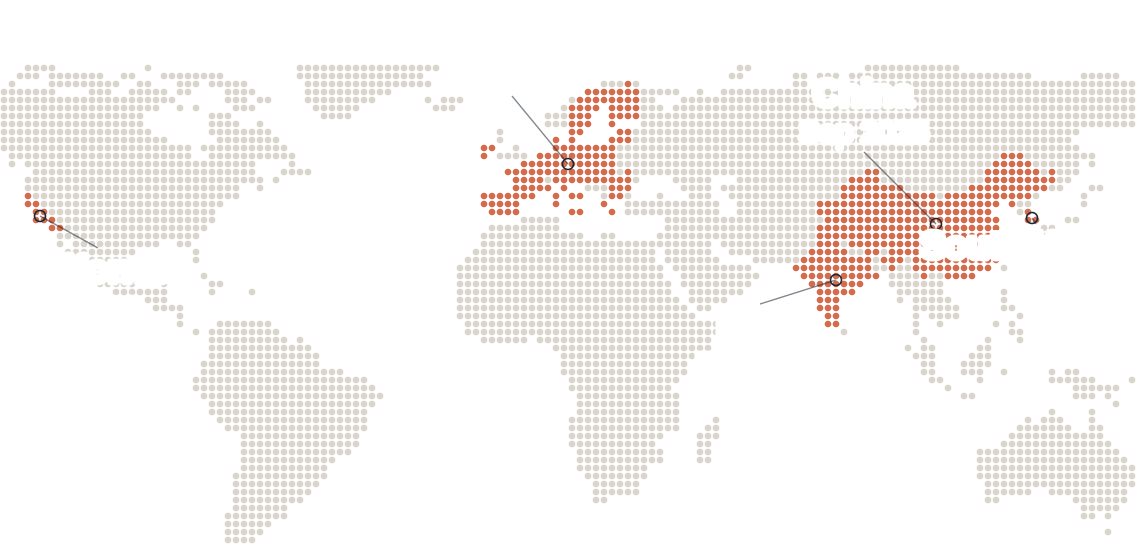
Governments are converging on one answer to synthetic media: label it. China moved first. Since September 2025, AI-generated text, images, audio and video must carry a visible label and a hidden one in the file's metadata, under rules from the Cyberspace Administration of China and the national standard GB 45438-202531.
Continue this chapter in the full report
Document fraud statistics: common questions
- How common is document fraud in 2026?
- Nearly one in five checks in our 2026 sample returned a tampered or AI-generated outcome, across lenders, employers, investment banks and background screening firms30. Industry data shows fewer forgery attempts overall, but far more convincing ones10.
- Which documents are forged most often?
- Income and employment documents. A quarter of payslip checks and around a fifth of bank statement checks in our sample found an alteration, against fewer than one in ten passport checks30.
- Are AI-generated documents common yet?
- Not yet, but they are growing. AI played a part in about one in ten flagged outcomes in our sample30, and Inscribe saw AI-generated document fraud grow nearly fivefold through 2025 from a small base14.
- Which countries require labels on AI-generated content?
- China since September 202531, South Korea since January 202632, India since February 202633, and the European Union and California since August 202628,34.
- How big is the document fraud detection market?
- Mordor Intelligence values it at $3.58B in 2026 and expects it to reach $9.16B by 2031, a growth rate of 20.7% a year1.
What fraud teams should change in 2027
- 1.
Examine the file, not only its contents.
- 2.
Screen every document at intake.
- 3.
Treat alteration and AI generation as distinct risks.
- 4.
Do not rely on issuer checks alone.
- 5.
Prepare for deepfakes in every channel.
Methodology
This report combines published third-party research with aggregated outcomes of checks run by TamperCheck. Each figure is labelled as measured (observed data), forecast (a published projection), survey (respondents' answers) or derived (our arithmetic on a published figure), and quoted with its source's own date.
Market forecasts differ by publisher because each defines the market differently. We name the publisher with every forecast and never add figures from different firms together.
Vendor datasets (Entrust, Sumsub, Inscribe, Snappt) describe each vendor's own customers, not the whole market.
TamperCheck figures are based on the outcomes of a sample of checks run over a six-month period in 2026 for organizations that consented to the use of the analysis results, excluding sandbox, internal test and evaluation jobs, with one outcome kept per unique file. Rates are shares of the outcomes in that sample. "Tampered" or "flagged" means a tampered or AI-generated outcome. Rates by document type are given only where at least 100 checks for at least five customers were run. A PDF "re-saved in a second program" means the outcome recorded that the file was rewritten or edited by a different program after it was first produced; "involved AI" means the outcome recorded an AI-generation finding, an AI-edit finding or a content credential naming an AI tool. Comparisons with scans and photos use outcomes where the document's origin was recorded.
The aggregate figures are published with the consent of the organizations to use the analysis results. TamperCheck.ai does not store any documents after the analysis is completed.
Sources
- 1.Document Fraud Detection Market Size, Share & Growth Trends Report. Mordor Intelligence, 2026.
- 2.Fraud Detection and Prevention Market. MarketsandMarkets, 2025.
- 3.Deepfake detection surging to $5B in revenue by 2027 for IDV protection. Biometric Update, Aug 2025.
- 4.Deepfake AI Market. MarketsandMarkets, 2025.
- 5.Digital ID verification market to hit $18.2B by 2027. SC World, 2022.
- 6.Generative AI is expected to magnify the risk of deepfakes and other fraud in banking. Deloitte Center for Financial Services, 2024.
- 7.Gartner Predicts AI Agents Will Reduce the Time It Takes to Exploit Account Exposures by 50% by 2027. Gartner, 18 Mar 2025.
- 8.Online payment fraud losses to exceed $343 billion. Help Net Security (Juniper Research), 18 Jul 2022.
- 9.Using biometrics to fight back against rising synthetic identity fraud. Deloitte Center for Financial Services, 2023.
- 10.Entrust 2027 Identity Fraud Report: Professional Fraud Networks Drive Record Growth. Entrust, 17 Nov 2026.
- 11.Entrust: Identity fraud is moving beyond one-time verification. Biometric Update, Nov 2026.
- 12.Fraudsters feed the right face into identity checks through virtual cameras. Help Net Security, 18 Nov 2026.
- 13.Identity Fraud Report 2026-2027. Sumsub, Nov 2026.
- 14.2026 State of Document Fraud Report. Inscribe, 2026.
- 15.State of Insurance Fraud Study. Verisk, Mar 2026.
- 16.Insurance fraud AI tools surge across US claims and cargo. Insurance Business (NICB), 2026.
- 17.Fraudulent insurance claims continue to top £1 billion. Association of British Insurers, Nov 2025.
- 18.Mortgage fraud risk, Q2 2026. HousingWire (Cotality), 2026.
- 19.Synthetic identities leave US lenders with $2.4 billion in fraud exposure. Help Net Security (TransUnion), 26 Oct 2026.
- 20.2026 Midyear Fraud Report. Snappt, Jul 2026.
- 21.NMHC Pulse Survey: Analyzing the Operational Impact of Rental Application Fraud and Bad Debt. National Multifamily Housing Council, Jan 2024.
- 22.Fake job candidates and AI. HR Dive (Gartner), 2025.
- 23.Degree fraud: the changing landscape and what employers can do about it. Prospects Luminate (Hedd), Nov 2025.
- 24.International Student Program reforms controlled growth, fell short on improving integrity. Office of the Auditor General of Canada, Mar 2026.
- 25.Danish Consulate in UAE warns of surge in fraudulent Schengen visa applications. The National, 23 Jul 2026.
- 26.FTC testifies before the Joint Economic Committee on the agency's efforts to combat fraud. Federal Trade Commission, Mar 2026.
- 27.FBI and FTC report 2025 fraud losses. AARP, 2026.
- 28.EU AI Act: Transparency Obligations Take Effect 2 August 2026. Cooley, 3 Aug 2026.
- 29.Gartner Predicts 30% of Enterprises Will Consider Identity Verification and Authentication Solutions Unreliable in Isolation Due to Deepfakes by 2026. Gartner, 1 Feb 2024.
- 30.Outcomes of TamperCheck checks over six months of 2026. TamperCheck, Nov 2026.
- 31.China's AI Labeling Measures and Mandatory National Standards Take Effect September 1. Loeb & Loeb, Mar 2025.
- 32.South Korean law to regulate AI takes effect. The Star (AFP), 23 Jan 2026.
- 33.Centre amends IT Rules to regulate AI-generated content; takedown timelines reduced. Bar & Bench, Feb 2026.
- 34.New California AI Disclosure Rules Become Operative. Morgan Lewis, Aug 2026.
Figures are quoted as each source published them, with the source's own date. Spot an error or a newer figure? Tell our support team.
Cite this report
You're welcome to quote any figure. Please name the original source shown next to it, and link to this page for TamperCheck's own data and estimates.
TamperCheck (2026). State of Document Forensics 2027: How forgery is changing, and what comes next. Updated 28 November 2026. https://tampercheck.ai/reports/state-of-document-forensics-2027